.png)

Employee? Here's what the 28 October Budget could mean for your payslip
Headline Income Tax and employee National Insurance rates are unlikely to change. But frozen thresholds can still increase the proportion of your pay going to tax.

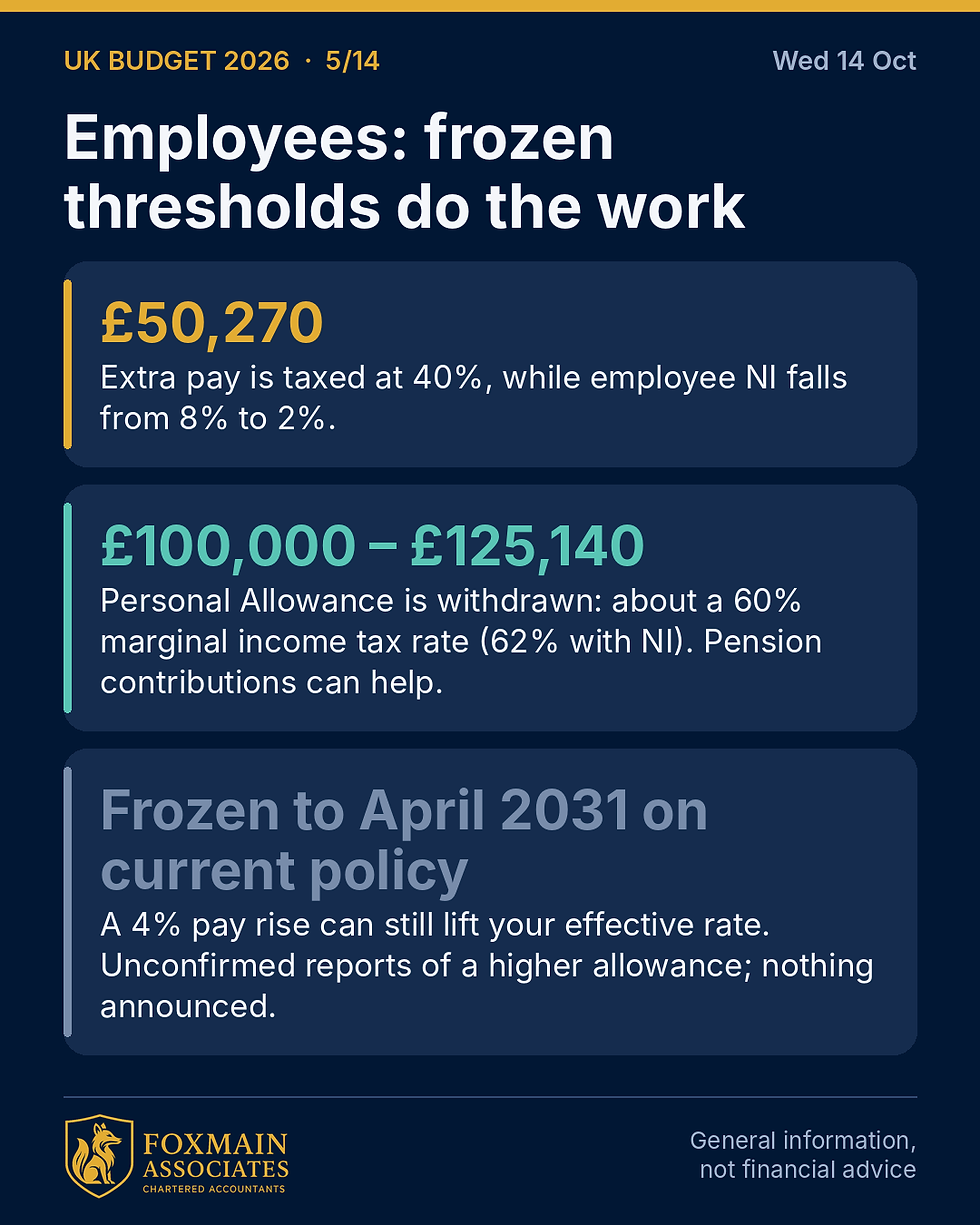
For 2026/27 in England, Wales and Northern Ireland, the 40% Income Tax rate starts above £50,270. Employee NI falls from 8% to 2% at the same threshold.
Both thresholds are currently set to remain frozen until April 2031.
There are reports that the Chancellor is considering increasing the £12,570 Personal Allowance, but nothing has been confirmed.
Two income ranges worth watching:
• £50,270–£60,000: Additional salary is generally subject to 40% Income Tax plus 2% employee NI. The £60,000 becomes relevant if you or your partner are in receipt of child benefit, as that is the point where HMRC will look to recover some of the benefit paid.
• £100,000–£125,140: The gradual withdrawal of the Personal Allowance creates an effective 60% marginal Income Tax rate, or 62% including employee NI. Eligible pension contributions can help reduce adjusted net income.
The indirect risk? Employer costs.
Employers generally pay 15% NI on annual earnings above £5,000. Further increases could affect pay settlements and hiring decisions rather than appearing directly on your payslip.
The key point: Even a 4% pay rise can increase your average tax rate when thresholds stay frozen.
You don't need a headline tax rise to end up paying a larger share of your earnings in tax.
General information only, not personal tax or financial advice.



Comments